

Tuesday 27th October
🎃 Good Morning and Happy Tuesday, Everyone! 👻
Day two of half term! I hope you're all enjoying a well-earned break and making the most of your time away from school! 😊
📚 Our Halloween 11+ Reading Comprehension lessons continue online at 9am today!
We'll be tackling another spooky story while practising inference, tricky vocabulary and understanding an author's choice of language. Be warned... things could get a little frightening! 🕷️🏚️
🔐 Need the password? Just message Mr O!
For anyone wanting to keep their learning ticking over this week, remember the two essentials:
📖 Read daily! Even 15–20 minutes makes a difference to your vocabulary and comprehension.
✖️ Keep practising your 2–12 times tables! Quick, confident recall is incredibly useful for 11+ Maths.
🌧️ It looks like more unsettled weather is on the way, and we're still hoping for some wonderfully spooky mist at Friday's Halloween party! 🌫️🎃
What perfect Halloween atmosphere!
Have a terrific Tuesday, everyone! Enjoy your half term! 😊
Mr O 🎃

Join us online every morning at 9am, from 26th–30th October, for approximately 45–60 minutes of Halloween-themed reading comprehension!
We'll be practising some of the most important skills needed for success in the 11+ exams, including making inferences using evidence from the text, working out the meanings of unfamiliar vocabulary, and explaining why authors choose particular words, phrases and techniques.
Expect mysterious stories, challenging questions and a few spooky surprises along the way! 🦇🎃
On this day... in 1492!

Did you know that on 27th October 1492, the famous explorer Christopher Columbus reached the island of Cuba during his first voyage across the Atlantic Ocean? ⛵
Columbus was searching for a sea route to Asia, but he had actually arrived in the Caribbean! Of course, the islands were already home to Indigenous people who had lived there for generations.
Imagine sailing across a vast ocean without GPS, satellite maps or even knowing exactly where you were going! 🌊🧭
This week's vocabulary:
facetious - to make jokes or act silly in a serious situation.
mortified - extremely embarrassed
abundance - a large number of something
Oliver was mortified when his friend made a facetious remark about his ridiculous Halloween costume in front of an abundance of giggling classmates.
Monday 26th October
🎃 Good Morning and Happy Monday, Everyone! 👻
Half term is finally here! 🥳 I hope you're all looking forward to a well-deserved break from school, with plenty of time to relax, have fun and enjoy yourselves!
📚 This week's only scheduled activities will be our daily online 11+ Reading Comprehension lessons at 9am, running throughout half term. There's a Halloween theme every day, so be warned... some of our stories might be a little frightening! 🕷️🏚️👀
🔐 Need the password? Just message Mr O and I'll make sure you can join us!
For those of you who would like to keep your learning ticking over during the holidays, I'd recommend focusing on just two very important things:
📖 Read every day! Even 15–20 minutes of good-quality reading can make a real difference to your vocabulary, comprehension and confidence.
✖️ Practise your times tables! Aim to recall all multiplication facts from the 2 to 12 times tables quickly and confidently. Being able to remember them instantly is a huge advantage in 11+ Maths!
🌧️ As for the weather, it looks as though we've got more rain on the way. And rather spookily, mist is forecast for Friday's Halloween party! 🌫️🎃
A misty Halloween evening? What wonderfully eerie ambience! We couldn't have planned it better! 👻🦇
Have a fantastic Monday, everyone, and enjoy your half term! 😊
Mr O 🎃
Join us online every morning at 9am, from 26th–30th October, for approximately 45–60 minutes of Halloween-themed reading comprehension!
We'll be practising some of the most important skills needed for success in the 11+ exams, including making inferences using evidence from the text, working out the meanings of unfamiliar vocabulary, and explaining why authors choose particular words, phrases and techniques.
Expect mysterious stories, challenging questions and a few spooky surprises along the way! 🦇🎃
Vocabulary Lesson @ 9am
Click below to join the meeting.

On this day... in 1863!
On 26th October 1863, the Football Association (FA) was founded in London? ⚽
Before then, different schools and clubs played football using their own rules. Some even allowed players to pick up the ball and run with it!
The FA helped create a common set of rules, laying the foundations for the modern game of football that millions of people enjoy today! 🏆

Sunday 25th October
Happy Sunday!
Now that the worst of the storm is behind us, Sunday is looking much more pleasant! We might still need our coats, as there's a definite chill in the air, but hopefully we can enjoy a calmer day after all that wind and rain! 🌤️
And there's another reason to smile… HALF TERM IS HERE! 🎉 You've all been working incredibly hard, and you deserve a chance to relax, have fun and recharge those batteries! There's absolutely nothing wrong with doing a little extra learning during the holidays, but remember that taking a break is important too! Spend time with family, enjoy your hobbies and make sure you have some fun.
📚🎃 HALF-TERM HALLOWEEN SPECIAL! 👻
Throughout next week, we'll have daily Halloween-themed Reading Comprehension lessons! Expect mysterious stories, spooky surprises and plenty of opportunities to practise your reading skills.
Confidence in reading comprehension is absolutely crucial for the 11+ exam, so these lessons are a fantastic opportunity to strengthen your understanding, develop your vocabulary and practise answering questions carefully.
🔐 If you don't have the password to access the lessons, please contact me as soon as possible!
Have a super Sunday, everyone! Enjoy the start of your half-term holiday, and get ready for a week of spooky reading adventures! 🎃📖✨
On this day...in 1881!
Did you know that on 25th October 1881, the famous artist Pablo Picasso was born in Spain?
Picasso became one of the world's most famous painters, but he didn't always paint people and objects the way we normally see them!
He loved experimenting with unusual shapes, bright colours and different viewpoints.
Some of his paintings showed faces with eyes and noses in surprising places! 👀🎨
Picasso helped develop an art style called Cubism, which uses geometric shapes to show objects and people from different angles.


Check out Lungdai perform her RAIN poem using
PERSONIFICATION.
Fantastic work, Lungdai!
Vocabulary Lesson @ 9am
Click below to join the meeting.

Friday 23rd October
🌧️ Happy Friday! ☔🍂
Well, Storm Austen certainly kept us entertained overnight! Between the heavy rain and the wind rattling the windows, I imagine a few of us had a rather interrupted night's sleep! And with more rain expected throughout the day, it doesn't look like the weather is giving us much of a break! ☔
If you're staying indoors today, it might be the perfect opportunity to pick up a good book and enjoy a bit of reading. 📚 Whether it's a mystery, an adventure or a spooky Halloween story, a rainy day is a great excuse to escape into a completely different world for a while!
And a little reminder that we have an online Maths lesson this evening! ➗✨ Nothing to stress about — we'll work through things together, practise a few skills and hopefully have some fun along the way!
Whatever you're doing today, stay safe, listen to your parents' advice about the weather and make the most of your Friday.
Have a fantastic Friday, everyone! See some of you online this evening! 💙📖
On this day...in 2026!
📚🎃 On this day, 23rd October 2026, a little piece of Bexley history was made!
The very first copy of An Anthology of Halloween Tales, written by some of Bexley's finest young writers, arrived from Amazon! 📦✨
Packed with spine-chilling stories, mysterious happenings and terrifying twists, this special collection contains some of the most frightening Halloween tales ever written! 👻🕷️
And the best part? Every story was created by the incredible imaginations of our very own young authors! ✍️🎃

Maths Lesson @ 6pm
Click below to join the meeting.
Activity 1:
Can you create your own poem about rain using hyperbole and personification?
The angry clouds roared across the sky,
As a million raindrops came tumbling by.
The wind screamed loudly through the trees,
While the rain danced wildly in the breeze.
The thunder shouted with all its might,
As lightning flashed across the night.
The rain cried rivers upon the ground,
And the storm shook the whole world with its sound!
Thursday 22nd October
🌧️ Happy Thursday! ☔🍂
Well, after yesterday's downpour, I think it's safe to say autumn has well and truly arrived! The rain certainly made its presence known, and with Storm Austen expected tomorrow, it looks like the weather has even more surprises in store! 🌪️
As always, listen to your parents and follow their advice about staying safe during stormy weather.
But while you're warm and safe indoors, why not turn the wild weather into something creative? There's something magical about watching raindrops race down the windows while the wind whistles outside. ✍️
🌟 Thursday's challenge: With tomorrow's storm approaching, could you use it as inspiration for a weather-themed poem? Try including personification and hyperbole, just as we've been practising!
Could the clouds be having an argument? Perhaps the wind is roaring louder than a thousand lions!
Have a terrific Thursday, everyone! Stay cosy, stay safe and keep those imaginations working! 🍁✨
On this day...in 2001!
Did you know that on 22nd October 2001, the very first Harry Potter film had its world premiere in London? 🪄
Harry Potter and the Philosopher's Stone brought Hogwarts, flying broomsticks and magical spells to the big screen for the first time!
The film helped introduce millions of people to the magical world created by J. K. Rowling. 🦉🏰
🤔 Today's challenge: If you could invent your own magical spell, what would you call it, and what would it do? ✨

English & Verbal Lesson @ 4pm
Click below to join the meeting.
Activity 1:
Can you create your own poem about rain using hyperbole and personification?
The angry clouds roared across the sky,
As a million raindrops came tumbling by.
The wind screamed loudly through the trees,
While the rain danced wildly in the breeze.
The thunder shouted with all its might,
As lightning flashed across the night.
The rain cried rivers upon the ground,
And the storm shook the whole world with its sound!
Wednesday 21st October
🌧️ Happy Wednesday, Everyone! ☔🍂
We're halfway through the week, and autumn is certainly making itself known! The mornings are chillier, temperatures are dropping, and the sun seems to be taking a rather long nap! With Storm Austen expected on Friday, things could get even more dramatic! 🌪️ Remember to always listen to your parents' advice about staying safe during storms.
Watching a storm from the warmth and safety of home can be wonderful inspiration for some creative writing! The howling wind, dancing raindrops and swaying trees could make a fantastic poem. ✍️
Wednesday's challenge: Why not write a short storm-inspired poem using personification and hyperbole, two techniques we've explored recently?
Perhaps the wind could scream through the trees, or the rain could fall with the force of a million waterfalls!
On this day...in 1879!
Did you know that on 21st October 1879, Thomas Edison and his team successfully tested a light bulb that could stay lit for hours?
Before electric lighting became common, people relied on candles, oil lamps and gas lights to brighten their homes! 🕯️
Imagine trying to read your favourite book or finish your homework by candlelight every evening!
Edison wasn't the first person to invent an electric light, but his work helped make electric lighting practical for everyday use.
🤔 Today's challenge: If you could invent something to make everyday life easier, what would it be? 🔬

Do you have a 1:1 lesson?
Click below to join the meeting.
Activity 1:
Figurative Language: Personification & Hyperbole

Tuesday 20th October
🌧️ Happy Tuesday, Everyone! ☔🍂
Well, it's certainly one of those Tuesdays where the rain seems determined to stick around!
The sort of day when puddles take over the pavements, umbrellas turn inside out and getting to school without soggy socks feels like an achievement! 😂
But there's something quite lovely about a rainy day too.
The sound of raindrops against the window, the smell of fresh rain and the thought of getting home to somewhere warm and cosy. ☕📚
Today's challenge: Have a look outside and see if you can think of five interesting words to describe the weather. Can you do better than just wet, cold and rainy?
11+ Vocabulary Wordsearch
Hidden inside this wordsearch are 14 words we've explored during our vocabulary lessons!
But there's a twist… there's NO word list! 😱
You'll need to put your memory, concentration and detective skills to the test to track down all 14 words!
💡 TOP TIP: Every time you discover a word, challenge yourself to explain its meaning aloud.
Can you remember the definition without any help?
Good luck, vocabulary detectives! Let the hunt begin! 🔍🏆
On this day...in 1994!
Did you know that on 20th October 1994, the first Goosebumps television episode aired?
Based on the spooky books by R. L. Stine, the series brought creepy monsters, haunted houses and mysterious adventures to children's television screens! 👻📺
Imagine settling down to watch a frightening story, never knowing what spooky surprise might happen next!
🤔 Today's challenge: If you could invent your own Goosebumps-style story, what would its title be? 🎃

Do you have a 1:1 lesson?
Click below to join the meeting.

Monday 19th October
🌟 Happy Sunday, Everyone! ☀️🍂
Sunday is the perfect day to recharge, enjoy some family time and get ready for a brand-new week!
Remember, success isn't just about working hard — it's also about finding time to rest and recharge. 🧠
Whether you're reading a book, playing outside or spending time with friends, every experience helps you grow in different ways!
Today's challenge: Spend just 15 minutes reviewing something you've learnt this week, then enjoy the rest of your Sunday doing something you love!
A fresh week means fresh opportunities to learn, improve and surprise yourself.

Mondays
5:00pm - 5:30pm
Verbal Word Games
Join Charlotte every Monday evening for fun-filled word games and exciting competitions, designed to strengthen children's verbal reasoning, vocabulary and letter skills!
On this day...in 1985!
Did you know that on 19th October 1985, the very first Blockbuster video rental shop opened in Dallas, Texas?
Before Netflix and streaming services existed, families would visit video shops to choose a film, take it home and watch it together! 🎬🍿
Imagine having to leave the house every time you wanted to watch a new film!

Do you have a 1:1 lesson?
Click below to join the meeting.
Sunday 18th October 2026
🌟 Happy Sunday, Everyone! ☀️🍂
Sunday is the perfect day to recharge, enjoy some family time and get ready for a brand-new week!
Remember, success isn't just about working hard — it's also about finding time to rest and recharge. 🧠
Whether you're reading a book, playing outside or spending time with friends, every experience helps you grow in different ways!
Today's challenge: Spend just 15 minutes reviewing something you've learnt this week, then enjoy the rest of your Sunday doing something you love!
A fresh week means fresh opportunities to learn, improve and surprise yourself.
On this day...in 1851!
Did you know that on 18th October 1851, the famous adventure novel Moby-Dick was first published in London under the title The Whale?
Written by Herman Melville, the story follows Captain Ahab on his dangerous quest to hunt an enormous white whale! 🌊
Interestingly, the book wasn't very successful at first, but it later became one of the most celebrated novels in history!
🤔 Today's challenge: If you discovered a mysterious creature deep in the ocean, what would you name it?
Remember, every great adventure begins with imagination! ✨

Vocabulary Lesson @ 09:00am.
Click below to join the meeting.

Words we have studied so far:
aloof ascertain catastrophe compulsory face the music indifferent inevitable meander oblivious portable putrid serene taut treacherous timid


Friday 16th October 2026
🌟 Happy Friday, Everyone! 🎉🍂
We've made it to Friday! Another school week is almost complete, and the weekend is just around the corner!
Here's something to think about: Have you ever avoided trying something because you were worried you wouldn't be very good at it?
Perhaps it was joining a sports team, speaking in front of your class or attempting a particularly difficult question.
Here's a little secret: Nobody starts off being brilliant at everything!
Even the world's greatest athletes, musicians and inventors were beginners once. What made the difference was their willingness to give things a go, even when success wasn't guaranteed.
The same applies at school. You might discover a hidden talent for creative writing, find that you enjoy a subject you once disliked or surprise yourself by solving a question you thought was impossible!
Today's challenge: Before the school week finishes, try something that takes you slightly outside your comfort zone. You might just discover something wonderful about yourself!
As we head towards the weekend, remember to be proud of everything you've achieved this week, including the things that didn't quite go to plan.
Remember, you don't have to be great at something to begin, but you do have to begin to become great! ✨
Shoutout to Holly!
Holly, you've made a fantastic start to the year!
You're always incredibly focused during lessons, and the thoughtful, well-explained reasoning you give demonstrates your excellent concentration and understanding.

I was particularly impressed by your approach to a recent non-verbal reasoning question involving triangles. You confidently explained how recognising the properties of an isosceles triangle helped you work out the answer. This showed brilliant mathematical thinking and an ability to apply your knowledge to unfamiliar problems.
Keep up the fantastic work, Holly! You're doing brilliantly, and I'm excited to see you continue to grow in confidence and ability.
Well done!
On this day... in 1854!
Did you know that on 16th October 1854, one of the most famous writers in history, Oscar Wilde, was born in Dublin, Ireland? ✍️
Oscar Wilde became a celebrated author, poet and playwright, famous for his extraordinary imagination, clever humour and brilliant use of language!
One of his best-known children's stories, The Happy Prince, tells the touching tale of a golden statue and a little swallow who work together to help people in need. 🐦👑
But here's something fascinating: Oscar Wilde was also famous for his incredible wit — his ability to make clever and amusing remarks using words!
More than 170 years after his birth, his stories and plays are still read and performed around the world.
🤔 Today's challenge: Imagine you could write a story that children would still be reading 170 years from now. What would your story be about?

Maths & Non-Verbal Reasoning @ 6pm.
Click below to join the meeting.

Thursday 15th October 2026
🌟 Happy Thursday, Everyone! 🍂
Did you know that scientists discover and officially describe thousands of new species every year? That's dozens of new species every single day, on average! 🌍
From unusual insects hiding in rainforests to mysterious creatures living deep beneath the ocean, our planet is still full of surprises!
And here's something exciting: some of the greatest discoveries begin with a simple question!
Think about your lessons at school. Whether you're investigating something in science, exploring an ancient civilisation in history or solving a tricky maths problem, you're developing the same curiosity that drives the world's greatest explorers and scientists!
School isn't just about knowing the answers. It's about learning how to ask brilliant questions! 🧠
Today's challenge: Ask a question in one of your lessons that makes you think a little deeper. Don't just discover what something is — try to understand why or how it happens.
With the weekend almost here, keep those curious minds busy!
Remember, every great discovery starts with someone wondering, "What if...?" ✨
English & Verbal Reasoning @ 4pm.
Click below to join the meeting.
On this day... in 1997!
Did you know that on 15th October 1997, NASA launched a spacecraft called Cassini on an incredible journey to Saturn? 🚀🪐
Cassini travelled through space for almost seven years before finally reaching Saturn in 2004!
During its mission, it took breathtaking photographs of Saturn's magnificent rings and discovered extraordinary things about its moons.
One of its most exciting discoveries was that Enceladus, one of Saturn's icy moons, has an ocean of liquid water hidden beneath its frozen surface! 🌊❄️
Scientists believe this makes Enceladus one of the most interesting places to investigate for possible life beyond Earth.
If you could send a spacecraft anywhere in space, where would you send it and what would you hope to discover? 🌟

Activity 1: Mixed Maths Reasoning

Wednesday 14th October 2026
🌟 Happy Wednesday, Everyone! 🍂
We're halfway through the week! 🎉 Just a little more hard work before the weekend arrives!
Here's something worth remembering: learning comes in many different forms. 📚
It's not always about sitting at a desk, completing worksheets or memorising facts.
You can learn by reading a fascinating book, exploring somewhere new, asking thoughtful questions, making mistakes or simply having an interesting conversation.
Even playing games, trying a new hobby or helping someone can teach you valuable skills! 🧠
Today's challenge: Try to learn something new in a way you wouldn't normally expect. You might be surprised by what you discover!
With half-term getting closer, keep making the most of each day. Remember, every new experience is an opportunity to grow.
Keep curious, keep exploring and keep learning! 🌈✨
On this day... in 1926!
On 14th October 1926, the beloved children's author A. A. Milne published Winnie-the-Pooh for the very first time! 🧸🍯
The book introduced readers to a honey-loving bear and his wonderful friends, including Piglet, Eeyore, Owl and Rabbit.
But did you know that Winnie-the-Pooh was inspired by a real teddy bear belonging to Milne's son, Christopher Robin? 🐻
The stories were set in the Hundred Acre Wood, inspired by Ashdown Forest in East Sussex, England. 🌳
Almost 100 years later, Winnie-the-Pooh remains one of the world's most recognisable children's characters!

Got a one to one lesson?
Click below to join the meeting.

Tuesday 13th October 2026
Happy Tuesday!
Have you ever wondered how people become really good at something?
Whether it's playing the piano, solving tricky puzzles, writing amazing stories or becoming a brilliant footballer, there's one thing they all have in common...
They practise, even when nobody is watching! 💪
It's easy to notice the big achievements, but what about all those little moments that lead up to them? The extra five minutes spent reading, the maths question you decided to try again, or the new word you remembered to use in a sentence.
Those small efforts add up to something extraordinary! 🧠
Here's a little challenge for today: do one thing that your future self will thank you for. Perhaps it's learning five new spellings, asking a question you've been too shy to ask, or helping someone who is finding something difficult.
And remember, learning isn't a race. Some things click straight away, while others take a little longer. What matters is that you keep moving forwards, at your own pace.
With half-term getting closer, there's plenty to look forward to, but there's also plenty to enjoy right now. So don't spend all your time counting down the days — make today a day worth remembering! 🍂
Got a one to one lesson?
Click below to join the meeting.

On this day... in 1884!
On 13th October 1884, countries from around the world agreed that Greenwich in London would be the starting point for measuring positions east and west around the Earth!
They chose an imaginary line called the Prime Meridian, which runs from the North Pole to the South Pole, passing through Greenwich. 🗺️
This line is marked as 0° longitude and helps us find exact locations on maps and work out different time zones around the world! 🕰️
🤔 Did you know you can visit Greenwich and stand with one foot on either side of the Prime Meridian?


Monday 12th October 2026
Happy Monday and Welcome to a brand new week!
A new week, a fresh start and another chance to grow!
First of all, a huge well done for all the hard work you've put in this term! 👏
Whether you've been tackling tricky maths questions, improving your writing or learning new vocabulary, you should be proud of your progress. And the good news? Just a couple more weeks of hard work before a well-deserved half-term break! 🎉
Remember, every new week brings new opportunities. Perhaps this will be the week you try something different, discover something fascinating or finally understand a topic you've been struggling with. Just because something was difficult last week doesn't mean it will be difficult forever. Keep trying! 🧠✨
And with the colder days and darker evenings arriving, there's no better excuse to get cosy indoors with a brilliant book! 📖🧣 Whether it's an exciting adventure or a fascinating non-fiction book, reading is one of the very best ways to learn independently. Every page introduces you to new words, ideas and knowledge — all while you're enjoying yourself!
So, be proud of how far you've come, stay curious and make the most of the opportunities ahead.
New week. New challenges. New things to discover. Let's make it count! 💪🌟

Got a one to one lesson?
Click below to join the meeting.
Can you spot 8 different types of figurative language?
🍂 October's Magical Mischief 🎃
October crept in like a thief in the night,
And painted the treetops orange and bright.
The wind was a wolf, howling through the trees,
While golden leaves danced in the chilly breeze.
Crunch! Crackle! Rustle! The fallen leaves cried,
As whispering winds swept far and wide.
The moon wore a grin in the darkening sky,
And clouds played hide-and-seek as they floated by.
A deafening silence filled the street,
As shadows stretched beneath my feet.
I was so cold I could freeze for a thousand years,
When a ghostly giggle tickled my ears!
But I decided to bite the bullet that night,
And face the strange sounds without any fright.
For October's a month of mystery and cheer,
When autumn's magic returns every year! 🍁
On this day... in 1942!

On 12th October 1492, explorer Christopher Columbus reached an island in the Caribbean after sailing across the Atlantic Ocean!
He thought he had found a new route to Asia, but he had actually reached the Americas, where people had already lived for thousands of years.
His journey became one of the most famous voyages in history!
Did You Know?
A Deck of Cards Holds an Almost Unimaginable Secret!
Did you know that the number of ways you can arrange a standard deck of 52 playing cards is so enormous that it's almost impossible to imagine?
Mathematicians call this number 52 factorial, written as 52!.
It's calculated by multiplying 52 × 51 × 50 × 49, and so on, all the way down to 1.
The result is a number with 68 digits!
In fact, there are so many possible arrangements that mathematicians believe that almost every time you properly shuffle a deck of cards, you create an order that has never existed before in the entire history of playing cards! 🤯
🌍 Now Here's Something Even More Mind-Blowing...
Imagine standing on the Earth's equator and taking just one step every billion years.
You continue walking until you've travelled all the way around the planet and returned to where you started.
Then, you take one tiny teaspoon of water from the ocean.
You begin your journey again, taking one step every billion years. Every time you complete another trip around the Earth, you remove another teaspoon of seawater.
You repeat this extraordinary process until every ocean on Earth is completely empty. 🌊
Now imagine counting every single second that has passed.
That number would be unimaginably huge — and yet it would still be far smaller than the number of ways you can arrange just 52 playing cards!
All that possibility, hidden inside one ordinary deck of cards.
Sometimes, mathematics is even more astonishing than science fiction! 🃏✨
Number of ways a deck of cards can be shuffled:
80,658,175,170,943,878,571,660,636,856,403,766,975,289,505,440,883,277,824,000,000,000,000
Number of teaspoons (5ml) of water in the Earth's oceans:
266,400,000,000,000,000,000,000
Mondays
6:00pm - 6:30pm
Verbal Word Games
Join Charlotte every Monday evening for fun-filled word games and exciting competitions, designed to strengthen children's verbal reasoning, vocabulary and letter skills!

Sunday 11th October 2026
Happy Sunday
Sunday is a day to rest, relax and recharge! 🌟
It's Sunday, and after a busy week of school, homework, lessons and activities, you've earned yourself a little time to relax! 🛋️
Sometimes, we become so focused on learning, improving and preparing for exams that we forget something equally important: giving our brains a chance to rest. You don't need to spend every spare moment answering questions or revising. Taking a break is important too! 🧠💤
But what if you're someone who actually enjoys learning, even on a Sunday? Well, learning doesn't always have to involve worksheets and practice questions!
📚 Why not pick up a non-fiction book? Discover something fascinating about space, ancient Egypt, the human body or an animal you've never heard of!
📺 Or watch an interesting documentary? There are so many incredible things to discover about our planet, its history and the people who live on it. You might learn something that you'll be desperate to tell your friends about tomorrow!
And, of course, there's our Sunday morning vocabulary lesson at 9:00 am! ✏️🌟 It's a relaxed, stress-free session where we explore interesting words, have a little fun and build our vocabulary together. No pressure, no worrying about getting things wrong — just an enjoyable way to start your Sunday!
Whatever you choose to do today, make sure you leave plenty of time for the things you love. Spend time with family, play outside, enjoy your hobbies or simply do absolutely nothing for a while!
Remember, a productive Sunday doesn't have to be a busy Sunday. Sometimes, the best thing you can do is rest and return on Monday feeling refreshed and ready to go! 💛🌟

Vocabulary Lesson @ 09:00am.
Click below to join the meeting.

Words we have studied so far:
aloof catastrophe compulsory derelict face the music indifferent meander petrified portable putrid serene taut treacherous timid wary

Friday 9th October 2026
It's a new day!
Another week nearly complete! 🎉
It’s 9th October, and we've made it to Friday! Before you start thinking about the weekend, take a moment to think about everything you've learnt over the past five days. 📚🍂
Think back to Monday morning. Since then, you've probably tackled new maths problems, discovered unfamiliar words, explored new topics and learnt things you didn't know existed! Some of those things might have seemed confusing at first, but look how far you've come. 🧠✨
And remember, learning doesn't always mean getting everything right. Perhaps you made a mistake and learnt how to correct it. Perhaps you asked a question you wouldn't normally ask, or finally understood something that had been puzzling you for ages. Those are achievements worth being proud of too! 💪
So, as you head into school for the final day of the week, ask yourself one question:
What's something I know today that I didn't know on Monday? 🤔
You might be surprised by how much your brain has grown in just one week!
Finish Friday strongly, be proud of your progress, and enjoy your well-earned weekend! 🌟🎉
Message to Parents: Halloween Disco
Just a polite reminder that if your child will be attending our Halloween Disco & Publication Event, their place must be reserved before 10th October.
For this event, we are hiring a much larger space at the same location — the main hall — so I need to confirm exact numbers in advance. The event also needs to be insured separately from our regular lessons, and I need to arrange the appropriate number of DBS-checked helpers based on how many children will be attending.
If your child would like to join us, please make sure their place is confirmed before the deadline.
Thank you! 🎃👻📚
On This Day... in 1940!
On 9th October 1940, a baby boy named John Lennon was born in Liverpool, England. He would grow up to become one of the most famous musicians in the world! 🌍🎤
John became a member of a band called The Beatles, alongside Paul McCartney, George Harrison and Ringo Starr. Together, they created songs that people still listen to today, more than 60 years later! 🎵
And here's something amazing: The Beatles became so popular that fans would scream so loudly at their concerts that the band could sometimes barely hear themselves playing! 😱🎸
🎤 Imagine: You're starting a band with three of your school friends. You can choose absolutely ANY name for your band!
What would you call yourselves, and what would your first song be about?

Mr. O's favourite song by The Beatles.
(A song written about Paul McCartney's dog <3 "
Maths & Non-Verbal Reasoning @ 6pm.
Click below to join the meeting.

Thursday 8th October 2026
It's a new day!
It’s 8th October, and although we’re already well into the month, yesterday and today have really made it feel as though autumn has finally arrived! The mornings are getting colder, the evenings are darker, and summer feels like a distant memory. Wrap up warm today! 🧣🍁
Now, think back to yesterday at school. Was there something you learnt that left you feeling confused? Perhaps a maths question you couldn't solve or an explanation you didn't quite understand. Well, today is a new day! Go back with a fresh mind and give it another try. You might be surprised how much difference a new perspective can make. 🧠✨
And while you're at school today, why not set yourself a little challenge? Can you produce the neatest handwriting you've ever done? Can you finish all your work and move on to the extension challenge? Can you put just a little more effort into something than you normally would? ✏️📚
You don't need to do anything extraordinary today. Sometimes, simply doing the ordinary things a little better than yesterday is something worth celebrating.
New day. Fresh mind. Let's make it count! 💪🌟
Message to Parents: Halloween Disco
Just a polite reminder that if your child will be attending our Halloween Disco & Publication Event, their place must be reserved before 10th October.
For this event, we are hiring a much larger space at the same location — the main hall — so I need to confirm exact numbers in advance. The event also needs to be insured separately from our regular lessons, and I need to arrange the appropriate number of DBS-checked helpers based on how many children will be attending.
If your child would like to join us, please make sure their place is confirmed before the deadline.
Thank you! 🎃👻📚
Activity 1: Vocabulary Challenge
Our Sunday morning vocabulary lessons have been fantastic so far! Nearly 30 of you attended last week, which is absolutely brilliant! 🌟👏
Vocabulary is one of the most important parts of preparing for the 11+ exam, and the more words you understand, the more confident you'll become when tackling tricky questions.
Below are the 15 words we've learnt since the beginning of September.
Your challenge is simple: Write a short, clear definition for each word. Nothing fancy — just a few words to show that you understand what it means. ✏️
If there are any words you've forgotten, don't worry! Grab a dictionary or thesaurus, or do a quick Google search to remind yourself.
The important thing is that you understand the words, not that you can memorise a long definition! 🧠✨
Aloof Catastrophe Compulsory Derelict Face the music Indifferent Meander Petrified Portable Putrid Serene Taut Timid Treacherous Wary
On This Day
On 8th October 2004, the animated film Shark Tale arrived in UK cinemas! 🎬🦈
The film follows Oscar, a little fish who dreams of becoming famous, and Lenny, a shark with a rather unusual secret... he doesn't like eating fish! 🐟😂
Imagine being a shark who doesn't want to eat fish, or a lion who's frightened of mice. Sometimes, being different from everyone else is what makes you special!
Got a 1:1 lesson today?
Click below to join the meeting.
Wednesday 7th October 2026
It's a new day!
It’s 7th October, and it really feels as though autumn has finally caught up with us. 🍁 The mornings are darker, the evenings seem to arrive much sooner, and the warm summer days are beginning to feel like a distant memory.
But why should summer get all the attention? Autumn has its own beauty — colourful leaves, crisp mornings, cosy evenings and the perfect excuse for a hot chocolate! ☕🍂 Let’s learn to welcome autumn just as much as we welcome summer.
And just as the seasons change, perhaps we can show a different side of ourselves too. Try something you wouldn’t normally try. Do some drawing in your spare time. Give a new sport a go. Or maybe even taste that food you’ve always insisted to your parents you don’t like... because you never know — maybe now you do! 😋
Message to Parents: Halloween Disco
Just a polite reminder that if your child will be attending our Halloween Disco & Publication Event, their place must be reserved before 10th October.
For this event, we are hiring a much larger space at the same location — the main hall — so I need to confirm exact numbers in advance. The event also needs to be insured separately from our regular lessons, and I need to arrange the appropriate number of DBS-checked helpers based on how many children will be attending.
If your child would like to join us, please make sure their place is confirmed before the deadline.
Thank you! 🎃👻📚


A huge congratulations to Max and his little brother, Luca, who worked together and used all the clues to finally crack the dragon’s secret name!
His name is… MAGIC! 🪄🐲
What you didn’t know was that I’d been sneaking the word MAGIC into our online lessons too — including our MATHS MAGIC lesson last Friday! These were secret bonus clues hidden in plain sight, so don’t worry if you didn’t spot them… I was being rather sneaky! 😏
But Max and Luca carefully pieced together the daily clues and managed to work out his name.
And off they go, soaring through the skies on Magic! ☁️🐉🏆
Keep coming back — there’ll be plenty more challenges to crack! 🧩🌟
Activity 1: Proportion Questions
In this type of question, students will need to use proportion to solve reasoning problems involving speed, distance and time.

Got a 1:1 lesson today?
Click below to join the meeting.
Tuesday 6th October 2026
Happy Tuesday! 🌟
Do something you normally avoid.
We all have things we’re tempted to dodge because they’re difficult, boring or we’re worried we won’t be very good at them. 😬
Today, pick one of those things and tackle it. Put your hand up in class. Attempt the tricky question. Try a new food. Speak to someone new. Have another go at something you usually give up on.
You don’t have to love it. You don’t even have to succeed.
Just prove to yourself that you were willing to try. 💪
On this day... in 2007!
On 6th October 2007, British adventurer Jason Lewis completed an absolutely enormous challenge — he travelled all the way around the world without using an engine! 🤯🌎
His adventure began in Greenwich, London, and he travelled more than 46,000 miles using only human power. He cycled, walked, rollerbladed and even crossed oceans in a pedal-powered boat! 🚲🛼🚣
And this definitely wasn't a quick trip. He began his journey in 1994, meaning it took him more than 13 YEARS to finally make it back! Imagine leaving for an adventure when you're 10 and not finishing until you're 23! 😱
🌍 Imagine: You have to travel around the world without using a car, train, aeroplane or anything with an engine. You can walk, cycle, row, skateboard, rollerblade or invent something completely new.
How are YOU getting around the world? 🚲🛹🌊✨
Challenge:
Can You Guess the Dragon’s Name?
Our mysterious little dragon has a name… but can you work out what it is?
You may make ONE guess each day, and a brand-new clue will be revealed every day to help you get closer to the answer. 🧩
Send your guess to me using your parent’s phone — but choose carefully, because once you’ve guessed, you’ll have to wait until tomorrow to try again!
🏆 The first student to correctly guess the dragon’s name wins a prize!
Good luck, detectives… today’s clue awaits! 🐉🔎✨

💭 Thought of the Day
Want to give your brain a secret advantage? Read. 📚🧠
Children who read regularly can build a much bigger vocabulary — potentially knowing thousands more words than children who rarely read. Every story introduces you to words, phrases and ideas that you might never hear in everyday conversation. 🌟
The best part? You don’t have to sit down and memorise a dictionary. By reading stories you actually enjoy, your brain is constantly meeting new words and gradually figuring out what they mean.
A few pages might not feel like much today, but keep reading regularly and all those words begin to add up. 📖✨
Got a 1:1 lesson today?
Click below to join the meeting.
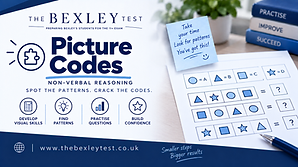
In this type of Non-Verbal Reasoning, you’ll need to spot the similarities and differences between objects and use what you discover to crack the code! 🔍🧩
A Personification Poem
The sun waved goodbye as it slipped from the sky,
While the moon stretched her arms and climbed up high.
The wind whispered secrets through shivering trees,
And the leaves danced together, swept up by the breeze.
The old house frowned at the end of the lane,
While the windows stared through the cold autumn rain.
The floorboards complained as I stepped through the door,
And the shadows crept quietly across the dusty floor.
Then the clock cleared its throat and began striking ten,
As the darkness reached out for the hallway again.
The stairs seemed to beckon, inviting me near...While the silence stood watching — and grinned in my ear.
Monday 5th October 2026
Happy Monday! 🌟
Two things. That’s today’s challenge.
Aim to learn one new thing at school — a new word, fact, method or idea.
Then learn one new thing away from school. It could be about an animal, a hobby, a place, a person or simply how something works.
By bedtime, you’ll know two things you didn’t know this morning.
Not bad for a Monday!
On this day... in 2011!
On 5th October 2011, the hugely popular mobile game Minecraft: Pocket Edition was released on Android! ⛏️🧱
Minecraft had already begun becoming popular on computers, but this version meant people could start building, exploring and surviving on a phone or tablet. Suddenly, you could take a blocky world around with you wherever you went!
The early version was actually much simpler than the Minecraft you might know today. Over the years, more animals, monsters, blocks, biomes and features were added, helping Minecraft grow into one of the biggest games ever made. 🐷💎🧟
🤯 Imagine: You wake up tomorrow and the REAL WORLD now follows Minecraft rules. You can punch trees for wood, build enormous houses in minutes and dig underground for diamonds...
What’s the first thing you’re building? 🏰🧱✨
Challenge:
Can You Guess the Dragon’s Name?
Our mysterious little dragon has a name… but can you work out what it is?
You may make ONE guess each day, and a brand-new clue will be revealed every day to help you get closer to the answer. 🧩
Send your guess to me using your parent’s phone — but choose carefully, because once you’ve guessed, you’ll have to wait until tomorrow to try again!
🏆 The first student to correctly guess the dragon’s name wins a prize!
Good luck, detectives… today’s clue awaits! 🐉🔎✨

💭 Thought of the Day
Sometimes the smallest act of kindness can completely change someone’s day. 💛
If you notice somebody alone in the playground, why not ask them to join your game? If someone looks upset, simply asking “Are you okay?” can remind them that somebody cares. You don’t have to be best friends with someone to be kind to them. 😊
It takes only a few seconds to notice when somebody might need a friend — but they could remember your kindness for a very long time.
Look around today. Someone might need you to make the first move. 🌟🤝
Got a 1:1 lesson today?
Click below to join the meeting.
Challenge:
Can you write a conversation between two people that uses at least EIGHT of the following words?
aloof
catastrophe
compulsory
face the music
indifferent
meander
portable
putrid
serene
taut
treacherous
timid
Sunday 4th October 2026
Happy Sunday! 🌟🎉
Before Monday comes knocking...
Sunday is your chance to enjoy the final bit of the weekend before another busy week begins. But instead of spending today thinking “Ugh, school tomorrow!”, make sure you actually enjoy the day you have in front of you. 😊
Do something fun. Get outside. Play a game. Spend time with your family. Read, draw, build, bake, watch something ridiculous or simply enjoy having nowhere you need to be for a while. 🎮⚽📚
Then, sometime before bed, get yourself ready for tomorrow. Pack your bag, find whatever you've somehow managed to lose since Friday, and head to bed knowing you're ready for a fresh week.
Don’t spend Sunday worrying about Monday — Monday can wait its turn! 🌟🍂
On this day... in 1957!
On 4th October 1957, something happened that changed the world forever — the first human-made object was successfully sent into orbit around Earth! 🚀
It was called Sputnik 1, and it looked surprisingly simple: a shiny metal ball with four long antennas sticking out of it. It was only about the size of a beach ball, but it managed to travel all the way around our planet in roughly 98 minutes! 🛰️🌎
Sputnik didn't have cameras, astronauts or fancy screens. Instead, it transmitted simple “beep, beep, beep” radio signals back to Earth that people could actually listen to. Its successful launch marked the beginning of what we now call the Space Age. 🚀
🤯 Think about this: today there are thousands of satellites orbiting above us, helping with things like GPS, weather forecasts, television and communication — but it all started with one little metal ball zooming around Earth.
Challenge:
Can You Guess the Dragon’s Name?
Our mysterious little dragon has a name… but can you work out what it is?
You may make ONE guess each day, and a brand-new clue will be revealed every day to help you get closer to the answer. 🧩
Send your guess to me using your parent’s phone — but choose carefully, because once you’ve guessed, you’ll have to wait until tomorrow to try again!
🏆 The first student to correctly guess the dragon’s name wins a prize!
Good luck, detectives… today’s clue awaits! 🐉🔎✨
💭 Thought of the Day
Your brain isn’t finished growing — and neither are you! 🧠🌱
Sometimes it’s tempting to say “I’m just not good at this” when something feels difficult. But struggling with something today doesn’t mean you’ll always struggle with it. Every time you practise, ask for help, learn from a mistake or try a different approach, you’re giving yourself another opportunity to improve. 💪✨
Instead of saying “I can’t do it,” try adding one tiny word: “yet.” You can’t do it yet.
Being clever isn’t about finding everything easy. It’s about being willing to keep learning when things aren’t. 🚀🌟
Vocabulary Lesson @ 09:00am.
Click below to join the meeting.
Words we have studied so far:
aloof catastrophe compulsory face the music indifferent meander portable putrid serene taut treacherous timid
Attending the Halloween Disco?
Please confirm before Saturday 10th October.
Friday 2nd October 2026
Happy Friday! 🌟🎉
Friday has entered the chat... 😎
You’ve made it through another week! Before your brain starts shouting “WEEKEND!”, remember that Friday still counts. There’s still time to understand something that confused you, finish something you started or simply end the week knowing you gave it a good go. 🧠💪
And when the schoolwork is finally finished? Switch off for a while! Play a game, kick a ball, read something you actually chose yourself, see your friends, watch a film or do absolutely nothing for a bit. Your brain needs time to recharge too. 🔋😊
Work hard today. Enjoy your weekend. Come back ready for another round.
Happy Friday! 🎉🍂✨
On this day... in 2016!
On 2nd October 2016, something VERY noisy happened in London! 1,827 children came together at the Queen Elizabeth Olympic Park to take part in an enormous drumming lesson — and they broke a Guinness World Record! 🥁🎉
The children came from 25 different primary schools and were aged between 7 and 11 — so many of them were around the same age as you! Imagine nearly 2,000 children all playing drums at the same time. You definitely wouldn't want to be the person next door trying to have a nap! 😂🎧
Even better, the event wasn't only about breaking a record. The children were drumming to support a project raising awareness for children living on the streets around the world. 🌍💛
Maths & Non-Verbal Reasoning @ 6pm.
Click below to join the meeting.

Challenge:
Can You Guess the Dragon’s Name?
Our mysterious little dragon has a name… but can you work out what it is?
You may make ONE guess each day, and a brand-new clue will be revealed every day to help you get closer to the answer. 🧩
Send your guess to me using your parent’s phone — but choose carefully, because once you’ve guessed, you’ll have to wait until tomorrow to try again!
🏆 The first student to correctly guess the dragon’s name wins a prize!
Good luck, detectives… today’s clue awaits! 🐉🔎✨

💭 Thought of the Day
A school is much more than classrooms, lessons and books. 🏫🌟
Every day, lots of people work together to make your school a safe, happy place to learn.
Teachers plan your lessons, teaching assistants help you when you’re stuck, dinner staff prepare and serve your food, office staff keep everything organised, and many other people work behind the scenes to help your day run smoothly. 📚🍎
Sometimes we can become so used to people helping us that we forget to notice it. A simple “thank you,” a smile, good manners or showing respect can mean much more than you realise. 😊
So today, remember the people who help make your education possible — and make sure they know that what they do matters. 💛✨
English Focus

Be kind to those who are different to you - or you might just lose your feathers.
Thursday 1st October 2026
Happy Thursday! 🌟
Hello, October! 🍂
A brand-new month has officially arrived! The mornings are getting darker, the leaves are changing colour and Halloween is creeping closer and closer... 👻🎃
October gives us 31 completely new days to fill. There’ll be things to learn, mistakes to make, challenges to overcome, laughs to have and probably a few surprises along the way.
So don’t worry about making October perfect. Instead, try to make it interesting. Learn something strange. Ask a question nobody else asks. Try something you've never tried before. And make a few memories while you’re at it. 🧠🍁
September is history. October starts NOW.
Let’s see what this month has in store... 🎃🍂✨
On this day... in 1971!
On 1st October 1971, Disney World opened its doors for the very first time in Florida, USA! 🎢🎠
The resort began with the Magic Kingdom, two hotels and a collection of attractions — a much smaller place than the enormous Walt Disney World people visit today.
Visitors could wander down Main Street, see Cinderella Castle and ride attractions including It’s a Small World. The park even had its own monorail transporting guests around! 🚝🏰
🤯 Think about this: when Walt Disney World first opened, a child's admission ticket cost just $1! Rides weren't all included, though — visitors bought separate tickets for the attractions they wanted to experience.
🎢 Imagine: You’re allowed to design a completely new theme-park ride. It can do ANYTHING you want. What happens on your ride? 🚀👻🐉✨
English & Verbal Reasoning @ 4pm.
Click below to join the meeting.
⏱️ Can You Beat the Clock?
🏆Complete this multiplication game in under 50 seconds!
If you manage it, ask your parent to send me proof of your time.🏆 The first student to complete the challenge in under 50
seconds will win a prize!
Ready?
Get those multiplication skills warmed up and GO! 🚀
💭 Thought of the Day
The most important progress is the progress you see in yourself. 🌟
It’s easy to compare yourself with other people — who gets the highest score, who learns something fastest or who seems to be brilliant at everything. But everyone is on their own journey, and success doesn’t have to mean being better than somebody else. 🌱
Instead, challenge yourself to grow. Can you understand something today that confused you yesterday? Can you try a little harder, be a little braver or improve at something you care about? 💪🧠
You don’t need to impress everyone around you. Make yourself proud, recognise your own progress and keep becoming the best version of you. ✨
Activity 1: Division Word Problems
Watch this recorded seminar and learn alongside other students as we take the division skills we learned on Tuesday and apply them to division word problems. ➗🧠
Remember to pause and have a go at each question yourself before listening to the answer — the best way to improve is to try it first! 💪✨
Vocabulary Challenge:
Very Tricky! Can you write a short story using ALL of the words we have studied so far?
Aloof
Catastrophe
Face the music
Compulsory
Indifferent
Meander
Portable
Putrid
Serene
Taut
Timid
Treacherous
Mia was usually timid and aloof, but she couldn’t remain indifferent when she spotted a portable lantern beside the treacherous path. She began to meander towards an old shed, where a putrid smell filled the otherwise serene garden. Suddenly, a taut rope snapped, sending a bucket crashing through a window — a complete catastrophe! Mia gulped; entering the garden had been strictly compulsory to avoid, and now she would have to face the music and explain everything to her parents.
Wednesday 30th September 2026
Happy Wednesday! 🌟
Well… that’s a wrap on September!
Today is the very last day of the month. Tomorrow, September disappears from the calendar and October officially begins! 🎃🍁
Before we wave goodbye, think back to where you were when September started. A whole month has passed since then! You’ve had roughly 30 mornings, 30 sunsets and thousands of little moments that now belong to the past.
So make the final page of September a good one. Enjoy today, do something worth remembering and then get ready to turn the page.
Goodbye, September. 👋🍂
October… you’re up next! 🎃✨
On this day... in 1967!
On 30th September 1967, BBC Radio 1 went on air for the very first time! It was created especially for people who wanted to hear the latest pop music, and its very first broadcast began at 7 o’clock in the morning. 🎙️📻
Back then, there was no Spotify, YouTube or Apple Music. If you wanted to hear your favourite new song, you might have to wait for it to come on the radio — and if you missed it, you couldn't simply press replay! 😱
The first song ever played on Radio 1 was Flowers in the Rain by a band called The Move.
🤯 Think about this: imagine hearing your absolute favourite song come on the radio... but somebody starts talking to you halfway through it! You couldn't restart it, skip backwards or ask Alexa to play it again. You'd just have to wait until somebody played it another time! 😂🎵
Do you have a 1:1 lesson today?
Click below to join the meeting.
⏱️ Can You Beat the Clock?
🏆Complete this multiplication game in under 50 seconds!
If you manage it, ask your parent to send me proof of your time.🏆 The first student to complete the challenge in under 50
seconds will win a prize!
Ready?
Get those multiplication skills warmed up and GO! 🚀
💭 Thought of the Day
One day, the world will be in your hands. 🌍✨
The children sitting in classrooms today will grow up to become the teachers, doctors, scientists, engineers, business owners, artists and leaders of tomorrow. You might not know yet what part you’ll play — and you certainly don’t need to have your whole future figured out! — but the things you learn and the person you become now will help shape it. 📚🌱
Your generation will eventually be trusted to look after the world and the people in it. So be curious, learn as much as you can, practise kindness and never underestimate what you might be capable of.
The future isn’t just something you’re going to live in — one day, you’ll help create it. 🚀🌟
Face to face students
Our spooky story writing and publishing project officially begins this week, and some of you have already created some brilliantly engaging openings! 📖✨
Don’t forget to bring your scary book to your lesson! We’ll be using these stories to investigate the techniques authors use to create suspense, tension and fear, as well as hunting for powerful vocabulary and language ideas that could inspire our own writing.
It’s time to start creating something seriously spooky... 🎃👻🕷️

Tuesday 29th September 2026
Happy Tuesday! 🌟
September is almost over — just a couple more days before we say goodbye to the month and welcome October! 🍁
Before you start looking ahead, take a moment to think about how much you’ve already learned this month. Think of all the new words you’ve discovered, maths methods you’ve practised, questions you’ve answered and mistakes you’ve learned from.
You probably know things today that you had no idea about at the beginning of September, and that’s something to be proud of! 🌟
Learning happens little by little, and sometimes we don’t notice just how much progress we’re making. So finish September strongly, be proud of how far you’ve come and get ready for a whole new month of learning and opportunities! 💪🍂✨
On this day... in 1999!
On 29th September 1999, the LEGO Group was named the maker of the “Toy of the Century” by Fortune magazine, beating other famous toys including the teddy bear and Barbie! 🏆
LEGO bricks had already been keeping children — and plenty of adults — busy for decades. One of the cleverest things about LEGO is that bricks made many years ago can still connect with bricks made today. That means children, parents and even grandparents can all enjoy building with the same basic system! 🧱🤯
And it’s definitely not just for children — even Mr. O found himself building a replica of the Solar System out of LEGO last Christmas! 🪐🌍😂
Sometimes following the instructions is great fun, but there’s nothing quite like using your imagination and creating something completely your own.
🌟 Imagine: You have an unlimited supply of LEGO bricks and an entire day to build whatever you want. What are you making? 🧱✨
Do you have a 1:1 lesson today?
Click below to join the meeting.
🎃 The time has come! 👻
With just over four weeks until Halloween, the countdown is officially ON! ⏰🎃
We’re working to a tight deadline, but I believe in every single one of you.
You have four weeks to plan, write, improve and polish your very own spooky masterpiece. Be creative. Be daring. Build suspense. Surprise your reader. And, most importantly... give them a good scare! 😱📖Your Halloween story begins now.I’ll see you on the other side... MWAHAHAHAHA! 🦇👻🎃
We are doing ALL writing together, students. There's no need to do any writing at home.
💭 Thought of the Day
Every living thing has a place in our world. 🌍🌱
From the enormous animals that amaze us to the tiny insects crawling beneath our feet, every living thing is part of nature. Plants give us oxygen and food, insects help flowers grow, and animals all play their own part in keeping our planet healthy. 🐝🌳🐾
We share this world with millions of other living things, so treat nature with care and respect — even the smallest creature matters. 💚🌎✨
Kiko is back!
A brand-new season of Kiko has arrived! 🎉📖
If you haven’t met Kiko yet — or you need a little reminder of her adventures — you can catch up on her journey by:
clicking here and reading the first four stories from Kiko: Season 1.
Already caught up and ready for more? Brilliant! 🌟
If you’d rather jump straight in and begin your Kiko journey with Season 2, that’s absolutely fine too.
A new season. A new story. A new adventure for Kiko begins... now! 🌸✨

Kiko: Beyond the Mountains — Season 2
Kiko’s journey continues in Season 2 as she leaves the familiar paths of Hoshinomura behind and ventures beyond the mountains for the very first time.
When Master Hiro takes his students on an expedition to the distant village of Mizunoki, Kiko can barely contain her excitement. At last, a proper warrior adventure! But when the group becomes lost in the forest, Kiko discovers that rushing ahead isn’t always the best way forward — and that the quietest person in the group might notice something everyone else has missed.
With new places to explore, new friendships to make and new lessons to learn, Kiko is beginning to discover just how enormous the world really is.
Her training has only just begun... and beyond the mountains, a whole new adventure awaits. 🏔️🌸✨
Monday 28th September 2026
Happy Monday! 🌟☀️
A brand-new week is here, which means five new days of opportunities! 🌱 You don’t need to achieve everything today — just start with one positive step. Learn something you didn’t know, ask a great question, help somebody out or have another go at something you find difficult. How you start the week can help shape the days that follow, so bring your best attitude and make Monday count! 🧠💪✨
On this day... in 1924!
On 28th September 1924, something incredible happened — the first ever flight around the entire world was completed! The journey had begun in Seattle, USA, nearly six months earlier, with four aeroplanes setting off on an enormous adventure around the planet.
The pilots travelled through places including Alaska, Japan, India, Britain and Iceland, battling terrible weather and mechanical problems along the way. Only two of the original four aeroplanes managed to complete the entire journey! 🌧️❄️
🤯 Think about this: the adventure took 175 days and covered around 27,550 miles. Today, passenger planes can fly around the world in a tiny fraction of that time!
🌍 Imagine: You’re allowed to fly around the world and stop in five countries along the way. Which five are you choosing? ✈️🗺️
Activity 1: Dividing Remainders
In this video lesson, students will learn how to use the bus stop method to divide numbers by a single digit, before learning how to convert any remainders into decimals. ➗🧠
💭 Thought of the Day
You don’t have to follow the crowd. 🌟
It’s easy to choose something simply because everyone else is doing it, but having the confidence to think for yourself is an important part of growing up. Your interests, ideas and opinions don’t always have to match those of your friends.
Be curious, ask questions and don’t be afraid to be yourself — being different is often what makes you interesting! 🧠✨
Do you have a 1:1 lesson today?
Click below to join the meeting.
📚 Face-to-Face Students
Just a quick reminder to bring your scary story to your next lesson! 🎃👻📖
For some of you, I already have your book ready and will give it to you when I see you at your next lesson.
Thank you, and happy reading! 😊📚
Sunday 27th September 2026
Happy Sunday! 🌟☀️
Sunday is a great day to rest, recharge and get ready for the week ahead. 🌱 Take some time to do something you enjoy, spend time with people you care about and give your brain a well-earned break. Then, think of one small thing you’d like to achieve next week. A new week means new lessons, new opportunities and plenty of chances to surprise yourself. Enjoy your Sunday — tomorrow is a fresh start! 📚✨😊
On this day... in 1998!
On 27th September, Google celebrates its birthday! Google began in 1998, when two university students, Larry Page and Sergey Brin, developed a new way of helping people find information on the rapidly growing internet.
Back then, Google was a tiny project operating from a garage. Today, children might recognise Google not only from searching the internet, but from things such as Google Maps, YouTube and Gmail. Google Store
🤯 Think about this: before search engines, finding the answer to a question could mean searching through an encyclopaedia, visiting a library or asking someone who might know. Today, you can type a question into a device and find information in seconds!

Christmas Writing Course
Write and publish your very own Christmas story! 📖✨
What could be a more special present for your grandparents, family or someone you love than a book written by you? Create your story, bring your imagination to life and give them a Christmas gift they can treasure forever. 🎄

💭 Thought of the Day
Nobody picks up a new skill and masters it straight away. Whether it’s solving a maths problem, learning an instrument, playing a sport or drawing a picture, improvement comes from trying, practising and trying again.
Don’t be embarrassed by what you can’t do yet — be excited about what you might be able to do soon. 🚀✨
Vocabulary Lesson @ 09:00am.
Click below to join the meeting.
Words we have studied so far:
aloof catastrophe compulsory indifferent meander portable serene taut timid
📚 Face-to-Face Students
Just a quick reminder to bring your scary story to your next lesson! 🎃👻📖
For some of you, I already have your book ready and will give it to you when I see you at your next lesson.
Thank you, and happy reading! 😊📚
Thursday 24th September 2026
Happy Thursday!🌟
The weekend is getting closer, but there’s still plenty of time to make this week a great one! 📚 Think about something you know now that you didn’t know at the start of the week — however small it might seem. Learning happens little by little, and all those new words, facts, skills and ideas soon add up. Keep adding to what you know today! 🧠✨
On this day... in 1991!
On 24th September 1991, the world said goodbye to Dr Seuss, one of the most famous children’s authors of all time. His wonderfully strange stories introduced generations of children to characters such as The Cat in the Hat, the Grinch and Horton the Elephant.
Dr Seuss loved using rhyme, made-up words and wonderfully silly characters to make reading fun. His books have sold hundreds of millions of copies and have been translated into dozens of languages around the world! 🌍📖
🎩 Here’s a fun fact: Dr Seuss had a collection of hundreds of unusual hats, which he sometimes wore while writing!

💭 Thought of the Day
Sometimes, the things we do every day are the easiest things to take for granted. 🏫📚
Going to school might feel completely normal, but having teachers to learn from, books to read, friends to learn alongside and the opportunity to get an education is something worth appreciating. For children in Britain, school gives you the chance to discover what you’re good at and build knowledge that can open doors in your future. So today, try to see school not just as somewhere you have to go, but as an opportunity you get to have. 🌟🎓
Activity 1: Anagrams
In this question type, you’ll be given a sentence containing a word written in CAPITAL LETTERS. There’s just one problem — the letters have been jumbled up and one letter is missing! 🔤🧩
Your job is to unscramble the letters to discover the correct word and then work out which letter is missing.
It might sound a little tricky at first, but don’t worry — it’ll make much more sense once you’ve watched the video tutorial! 🎥✨
Watch Video
Verbal Reasoning Live Lesson @ 4pm.
Click below to join the meeting.

Wednesday 23rd September 2026
Happy Wednesday!🌟
We’re halfway through the school week, and today is a great day to remember that effort matters just as much as getting the right answer. Every time you concentrate, have another go or keep working when something feels tricky, you’re building habits that will help you far beyond the classroom. So give today your best effort — you might surprise yourself with what you can achieve! 🧠💪✨
On this day... in 1846!
On 23rd September 1846, the planet Neptune was discovered!
Astronomers had actually used maths to predict where the mysterious planet might be before Johann Gottfried Galle spotted it through a telescope. 🧮🔭
Neptune is the eighth and most distant planet from the Sun and is billions of kilometres away from Earth.
🚗 Here’s a mind-blowing thought: if you could drive a car to Neptune at 70 mph without ever stopping, it would take roughly 4,400 years to get there! Of course, you can’t actually drive to Neptune — there are no roads through space! 😄
Challenge:
Take a look at the word below. How many different words can you create using its letters?
You may use each letter only once in each word.
How many can you find?
DOCUMENTARY
💭 Thought of the Day
Make time for the things you enjoy. 🎨⚽🎵
Hobbies give us a chance to switch off, have fun and discover talents we might not know we have. Whether you enjoy sport, drawing, gaming, reading, dancing, cooking or collecting something unusual, having an interest outside of school is important. You don’t have to be the best at it — sometimes doing something simply because you enjoy it is reason enough! 🌟
Got a 1:1 lesson today?
Click below to join the meeting.

Tuesday 22nd September 2026
Happy Tuesday, and welcome to Autumn!🌟🍁
Every day is a chance to add something new to what you know. It might be a new word, a clever maths method, an interesting fact or simply a better way of thinking about something. You don’t need to learn everything at once — just aim to know a little more tonight than you did this morning. 🧠📚✨
On this day... in 1955!
On 22nd September 1955, ITV began broadcasting in Britain for the very first time! Until then, British television viewers had only been able to watch BBC channels.
That evening also brought another television first — the first TV advert broadcast in the UK! It was an advert for toothpaste. 🪥 The launch of ITV helped change British television forever, bringing viewers a new choice of programmes, news and entertainment.
🌟 Imagine: You can only keep three television programmes to watch for the rest of the year. Which three are you choosing? 📺
Below are some words that Shakespeare helped make famous.
His plays contain some of the earliest known examples of these words being used — and amazingly, we still use them today! 🎭
-
Assassination
-
Bedroom
-
Lonely
-
Majestic
-
Countless
-
Generous
-
Gloomy
-
Radiance
-
Suspicious
-
Fashionable
-
Critic
-
Eventful
💭 Thought of the Day
A new season can be the start of a new chapter.
Today marks the beginning of autumn — a fresh season and a chance for a fresh start. 🍁 Think of it as turning to a new chapter in your story. What would you like to learn, improve or achieve before this season ends? Whatever you choose, today is a great day to begin. 📖✨
Activity 1:
Reading for information
For today’s activity, join me and a group of students for a pre-recorded online lesson as we explore a type of Verbal Reasoning question called Reading for Information, where careful reading and attention to detail are essential. 🔎📖
Remember to pause the video whenever a question appears and have a go yourself before listening to the students’ answers and explanations. Can you spot the important details before they do? 🧠✨
Got a 1:1 lesson today?
Click below to join the meeting.
Monday 21st September 2026
Happy Monday!🌟
A brand-new week means a fresh start and another chance to grow! Every new week brings new opportunities to learn, improve and get one step closer to your goals.
Don’t worry about getting everything right straight away — focus on making progress, one question at a time. Start the week with a positive mindset, believe in yourself and give today your best effort.
You’ve got a whole week of possibilities ahead of you! 💪📚✨
On this day... in 1866!
On 21st September 1866, H. G. Wells was born in Bromley, Kent. He grew up to become one of Britain’s most famous writers and is often described as one of the pioneers of science fiction.
Wells wrote incredible stories about time travel, invisible people and even visitors from Mars! 👽⏰
His famous books include The Time Machine, The Invisible Man and The War of the Worlds.
Just imagine — more than 100 years ago, Wells was writing stories about inventions and adventures that seemed impossible at the time! 🌍✨
Remember, when writing, to wash your hair.
Idiom
Simile
Hyperbole
Alliteration
Metaphor
Personification
Onomatopoeia
Oxymoron
💭 Thought of the Day
Remember that everyone has feelings — and animals do too. 💙🐾
People and animals might not always be able to tell us exactly how they’re feeling, so it’s important to be gentle, patient and kind.
The way we speak, behave and treat others can make a bigger difference than we realise.
Today, think about how your actions might make another person or an animal feel. Choose kindness, even when nobody is watching. 😊🐶🐱✨
Activity 1:
Making inferences from texts
Inference is one of the most important reading comprehension skills you’ll need for the 11+ exam. It means working out what is happening by spotting clues in the text, reading between the lines and using the context to understand what the writer really means — even when they don’t tell you directly.
Watch the video carefully to learn how inference works, then put your own reasoning skills to the test with the short text and questions at the end. 🔎📖

Got a 1:1 lesson today?
Click below to join the meeting.
Friday 18th September 2026
Happy Friday!🌟
You’ve made it to the end of the week! Friday is a great time to look back at what you’ve learnt and recognise the progress you’ve made. Every question you’ve attempted and every mistake you’ve learnt from has helped you improve. Finish the week with focus, give today your best effort, and head into the weekend feeling proud! 💪📚✨
On this day... in 1709!
On 18th September 1709, Samuel Johnson was born in Lichfield, England. He grew up to become one of Britain’s most famous writers and created an enormous dictionary of the English language.
His dictionary was published in 1755 after years of hard work and contained thousands of words and their meanings. Imagine having to write a dictionary without being able to quickly search for a word online! 😲📖
🌟 Challenge: If you could add one completely new word to the dictionary, what would it be — and what would it mean?
Back in the nineties
Back in the nineties, answers took time,
We searched through books to find what we knew.
No instant search or answers online,
No world of knowledge waiting for you.
We turned through pages, hunting for clues,
Or asked someone who might know the way.
Now you can learn whatever you choose,
With answers just a few taps away.
So use this amazing age to explore,
Ask questions and follow where they lead.
There’s always something new to learn more,
And almost every answer you need.
Be curious, discover, question and do,
There’s so much out there waiting to see.
The world’s at your fingertips, waiting for you —
So learn who you are, and who you could be. 🌟
Maths & Non-Verbal @ 6pm
Click below to join the meeting.

💭 Thought of the Day
Be someone who makes other people’s day better. 😊
A kind word, a smile, sharing something or helping someone who is struggling might seem like a small thing to you, but it could mean a lot to them. Today, see if you can do one unexpected act of kindness — without being asked and without expecting anything in return. 💙✨
Activity 1:
Ten Minute Test
Take the test before watching the video solutions.
📝 The questions are based on everything we’ve covered so far, so it’s a great opportunity to see how much you can remember!
If you find anything tricky, don’t worry — let me know in person if you attend face-to-face lessons, or rewatch the relevant lesson video for a quick refresher. 🎥✨
📚 What is Mr O’s Favourite Book? What’s Yours?
My favourite book is Frankenstein, written in 1818 by a brilliant author named Mary Shelley. I find it fascinating because it was one of the earliest examples of science fiction and helped inspire a whole new type of storytelling!
It tells the story of Victor Frankenstein, a young scientist who becomes obsessed with discovering the secret of life and eventually succeeds in creating a living creature. But things don’t quite go according to plan... ⚡
The original novel was written over 200 years ago, so the language is quite different from the books you’re probably used to reading today. There are some brilliant children’s adaptations you can enjoy now — and when you’re a little older, I’d definitely recommend discovering Mary Shelley’s original for yourself! 📖
Now it’s your turn — what’s your favourite book, and why? 🌟
Did you know?
A PALINDROME is a word that reads the same forwards and backwards:
LEVEL, RADAR, CIVIC, KAYAK
Can you think of anymore?
Thursday 17th September 2026
Happy Thursday!🌟
The weekend is getting closer, but there’s still plenty of time to make today count! 📚✨ Remember, being a great learner isn’t about knowing all the answers — it’s about being curious enough to look for them. Ask why, wonder how, investigate things you don’t understand and never be afraid to explore a new idea. You might be surprised where one simple question can lead you! Stay curious today — your next discovery could be just around the corner. 🔎🧠🌟
On this day... in 1970!
On 17th September 1970, Scooby-Doo made his first appearance on British television! 📺 The cartoon Scooby-Doo, Where Are You? introduced UK viewers to Scooby and his friends as they travelled around solving spooky mysteries involving ghosts, monsters and plenty of suspicious characters.
Of course, Scooby wasn't exactly the bravest detective around — he was often more interested in Scooby Snacks than chasing monsters! 😂 Yet somehow, the gang always managed to uncover the truth behind each mystery.
English & Verbal Reasoning @ 4pm
Click below to join the meeting.
💭 Thought of the Day
Your brain grows stronger every time you challenge it. 🧠💪
It can be tempting to choose the easiest question or give up when something looks difficult, but challenges are where some of the best learning happens. Stretch your thinking, try something that makes you pause and don’t worry if you have to think for a while. A question that makes your brain work hard is helping it grow! 🌱⭐
Activity 1:
Missing Numbers in Column Multiplication
(Tricky - but you've go this!)
Put your multiplication detective skills to the test! 🔍 Use your times tables, column multiplication and logical thinking to work out the missing digits in each calculation.
Ready for another dictionary clue?
F I R S T I S T H E L O W E S T O F T H E T H R E E
Wednesday 16th September 2026
Happy Wednesday!🌟
We’re halfway through the week, so today is a great day to remember that learning isn’t a race. 🏃♂️📚 Some people understand things quickly, while others need a little more time — and that’s perfectly fine! What matters is that you keep moving forwards, one small step at a time. Try not to compare yourself with the person sitting next to you; instead, compare yourself with the person you were yesterday. Learn one new word, solve one tricky problem or discover one fascinating fact, and you’ve already made progress. Keep going — every little bit of learning adds up! 🧠✨
On this day... in 1620!
On 16th September 1620, a famous ship called the Mayflower set sail from Plymouth, England, on an enormous journey across the Atlantic Ocean. ⛵
More than 100 passengers were squeezed aboard the wooden ship as it travelled towards North America. The voyage lasted more than two months and brought rough seas, storms and very cramped living conditions!
The Mayflower’s journey became an important part of history and is still remembered more than 400 years later.
🌟 Imagine spending two months on a small wooden ship with no internet, television or video games — what would you take with you to keep yourself entertained?
Have a live lesson scheduled today?
Click below to join the meeting.
💭 Thought of the Day
Every expert was once a beginner. 🌱
You won’t be brilliant at everything the first time you try — and you don’t need to be! Mistakes, tricky questions and wrong answers are all part of learning. What matters is that you keep practising, learn from your mistakes and have another go. Something that feels difficult today might feel easy in a few weeks’ time! ⭐
Activity 1: Verbal Reasoning Word Codes
Join me and a group of students for a recorded webinar as we explore a common type of Verbal Reasoning question: Word Codes. 🧠🔤
Remember to pause the video whenever a question appears and have a go yourself before listening to the students’ answers and explanations.
Activity 2: Poetry Comprehension
Attached is a video performance by Sigrid Solbakk Raabe, along with the song lyrics. 🎵 Have a listen to the song and then read carefully through the lyrics — or, if you prefer, follow the lyrics as you listen. Once you’ve finished, put your reading comprehension skills to the test by answering the questions provided. Remember to look closely at the lyrics for clues before choosing your answers! 🎧📖
Tuesday 15th September 2026
Happy Tuesday!🌟
Welcome to today’s lesson! 🌟 Did you learn something at school today or yesterday that you found a little tricky? Sometimes, children — and adults too! — pretend they understand something because they’re worried about feeling silly. But there is absolutely nothing silly about needing a little extra help. That’s what teachers and schools are there for! Sometimes we need to hear something, read it, practise it, write it down and try it again and again until suddenly… it clicks! 💡 Keep asking questions, keep trying and never give up. Perseverance and a thirst for knowledge are two of the greatest ingredients for success! 📚🧠
On this day... in 1890!
On 15th September 1890, the famous mystery writer Agatha Christie was born in Devon, England. 🔎📚
She grew up to create some of literature’s best-known detectives, including Hercule Poirot and Miss Marple, filling her stories with mysterious clues, suspicious characters and unexpected twists.
Christie became one of the best-selling fiction writers of all time, and her books continue to challenge readers to solve the mystery before the detective reveals the answer!
Have a live lesson scheduled today?
Click below to join the meeting.
💭 Thought of the Day
Learning isn't only about books and lessons. Eating well, staying active, drinking plenty of water and getting enough sleep all help your brain stay focused and ready to learn. Look after your body, and you're looking after your mind too! ⭐
I is one, II is two, III is three.
Struggling with Roman numerals, or do you already think they’re great fun? Either way, check out the awesome video below! 🎶🏛️ It uses a fun, catchy song to help you learn and remember Roman numerals. Listen carefully, sing along and see how many you can remember by the end! 🎵🧠
Activity 1: Personification
For today’s activity, we’re going to define, identify and create personification — a special type of figurative language used by many of your favourite authors! 📚✨ Personification helps writers bring their descriptions to life by giving human actions, feelings or qualities to things that aren’t human. It’s also an important skill for the 11+ Reading Comprehension, where you may be asked to identify personification or explain why an author has chosen to use it and what effect it has on the reader. So, let’s find out how it works and then have a go at creating some brilliant examples of our own! ✍️🌟
Don't you... forget about me
Hey, hey, hey, hey!
From animals with Simple Minds to humans with slightly more complicated ones, there’s one thing we can all agree on:
Practice makes perfect! 🧠✨
That’s why, every now and then, I’m going to give you a little nudge to practise the vocabulary we’ve learned so far. The more often you use new words, the more naturally they’ll become part of your everyday vocabulary.
So, are you ready? Here’s your challenge!
Choose TWO words from the list below and say a sentence to a relative that uses both words correctly:
Catastrophe • Compulsory • Meander • Portable • Serene • Timid
Monday 14th September 2026
It's a new week! Happy Monday!🌟
Welcome to a brand-new week! It’s the 14th of September, and by now you should be properly settled into your new school year. What topic are you studying this term, and what are you most excited to discover and learn about?
Remember, every day is an opportunity to learn something new. Be enthusiastic, stay curious and never be afraid to ask questions. Some of the greatest discoveries begin with someone simply asking, “Why?” 🌟
On this day... in 1752!
On 14th September 1752, people across Britain woke up to a rather unusual situation — eleven days had disappeared from the calendar! 📅
Britain had changed from the old Julian calendar to the more accurate Gregorian calendar, so Wednesday 2nd September was followed immediately by Thursday 14th September. Imagine going to bed on the 2nd and waking up on the 14th! The change helped bring Britain’s calendar into line with many other European countries.
🌟 Think about it: If you could make one school day disappear from the calendar, which would you choose? 😄
Have a live lesson scheduled today?
Click below to join the meeting.
💭 Thought of the Day
“Every new word you learn gives you a new way to express what you think, feel and imagine.” 📚✨
A strong vocabulary isn’t just about knowing difficult words. The more words you know, the more precisely you can understand the world — and explain your ideas to others.
Horrible Histories - William Shakespeare
William Shakespeare was one of Britain’s most famous and influential writers, creating some of the greatest plays and poems ever written. 🎭📚
Learn more about the life and work of William Shakespeare through one of my favourite Horrible Histories songs of all time! It’s a brilliantly funny way to discover more about the man behind Romeo and Juliet, Macbeth and A Midsummer Night’s Dream. 🎶✨
Activity 1: Non-Verbal (Most Alike)
For Activity 1 today, I’m inviting you to join a recorded seminar with me and some of last year’s very talented students as we explore a common type of Non-Verbal Reasoning question: Most Alike.
As you watch, remember to pause the video whenever a question appears and have a go yourself before hearing the students’ answers and explanations.

Sunday 13th September 2026
Happy Sunday, Students! 🌟
There are no new activities set for today, so enjoy your Sunday! However, if you find yourself with a little spare time, have a look back through the previous days and catch up on any activities you may have missed or not yet completed.
If you’re eager to keep learning and you’re completely up to date, here are a few simple ways you can continue developing your skills:
-
Practise your times tables, particularly the ones you find tricky. Remember, truly mastering your times tables means being able to recall the answers quickly and automatically, without breaking your rhythm.
-
Play a game of Scrabble. It’s a fun way to improve spelling, increase your vocabulary, think quickly and practise rearranging letters to form words.
-
Discover something new. Watch an interesting documentary or read about a fascinating person, place, event or topic. You never know what might capture your imagination!
Most importantly, enjoy your Sunday and come back refreshed and ready for another week of learning! ⭐
On this day... in 1916!
On 13th September, we celebrate the birthday of one of Britain’s best-known children’s authors, Roald Dahl, who was born in 1916.
Before becoming a writer, Dahl had an adventurous life that included being a fighter pilot and a spy, but he later became famous for creating unforgettable stories such as Matilda, The BFG, Charlie and the Chocolate Factory and Fantastic Mr Fox.
Today, 13th September is also celebrated as Roald Dahl Story Day, encouraging children to enjoy stories, play with language and use their imaginations. Challenge: If you could invent a Roald Dahl-style character, what wonderfully unusual name would you give them?

💭 Thought of the Day
“Like Matilda, never underestimate the power of a curious mind.”
You don’t need extraordinary powers to achieve extraordinary things. Read, ask questions, stay curious and never stop learning — your mind might just be your greatest superpower! 📚✨
Live Lesson today at 09:00am
11+ Vocabulary

Words we have learned so far:
Compulsory
Serene
Timid
Friday 11th September 2026
Welcome to today’s lesson!
🎉 And… it’s Friday!
Just one more day of crunching those times tables, perfecting your handwriting, and discovering lots of cool new things before you can put your feet up and enjoy the weekend! 🙌
How has your first full week back at school been? Hopefully, you’re starting to settle into your new routines and getting used to everything again.
💭 Have a think: What’s one interesting thing you’ve learned this week?
Now, here’s your challenge… can you find out something MORE about it? 🔎🧠
Sometimes, the best learning starts with simply being curious!
On this day... in 1846!
🌕 A robot landed on the Moon!
On 11 September 1967, a spacecraft called Surveyor 5 successfully landed on the Moon. 🚀
But it didn’t just take photographs — Surveyor 5 became the first spacecraft ever to analyse the soil on another world! Scientists could use the information it sent back to learn what the Moon’s surface was made from. 🔬🌕
Getting there wasn’t easy. The spacecraft developed a problem on its journey, and engineers had to quickly work out a new way to land it safely. Amazingly, it worked!
Surveyor 5 eventually sent back more than 20,000 photographs from the Moon. 📸
And here’s the really cool part…
Less than two years later, Apollo 11 landed humans on the Moon only about 25 kilometres away from where Surveyor 5 had landed!
Live Lesson today at 6:00pm. Click below to join.
(Maths & Non-Verbal Reasoning)

Activity 1

At first glance, Baker Street may seem like an ordinary London road, but behind its busy traffic and familiar buildings lies an extraordinary literary legacy. It became world-famous when Sir Arthur Conan Doyle chose 221B Baker Street as the fictional home of his brilliant detective, Sherlock Holmes.
Discover how Holmes and his loyal companion, Dr John Watson, captured the imaginations of generations through mysteries solved with logic, observation and an exceptional eye for detail. Then explore how fiction spilled into the real world, transforming Baker Street into a destination visited by Sherlock Holmes fans from across the globe.


💭 Thought of the Day
“Don’t be afraid to get things wrong — most people are far too busy thinking about their own mistakes to worry about yours!” 🌱
Putting your hand up, trying something difficult or giving an answer that turns out to be wrong might feel embarrassing for a moment — but that’s how learning happens.
✨ Be brave enough to have a go. Making a mistake is much better than never trying because you were worried about what others might think.
Thursday 10th September 2026
Welcome to today’s lesson!
How was school today? 😊
You should be starting to feel settled into your new school year by now, but don’t worry if you’re still getting used to things. New routines, new classes and new challenges can take a little time — that’s all part of being human! 🌱
💭 Have a think: What’s one thing you learned at school today that you didn’t know yesterday?
On this day... in 1846!
🔭 A new moon was discovered!
On 10 September 1846, astronomer William Lassell discovered Triton, the largest moon of the planet Neptune! 🌙🔵
What makes this even more amazing is that Neptune itself had only been discovered 17 days earlier!
Lassell used a telescope that he had built himself to look at the newly discovered planet. As he observed Neptune, he spotted something tiny nearby — a moon that nobody had ever seen before!
Triton is a very unusual place. It is extremely cold, has a surface covered in frozen material, and even has geyser-like eruptions that shoot material high above its surface. ❄️
Live Lesson today at 4:00pm. Click below to join.
(English & Verbal Reasoning)
Activity 1

Charles is quiet, distant and a little different. While the other children race around the playground, he prefers to stand at the edges, noticing things that everyone else seems to miss. When his classmates begin to watch more closely, they discover there is far more to Charles than they imagined. From helping an exhausted bee to carefully rescuing a damaged fly, Charles has an extraordinary understanding of the tiny creatures that share their world. Soon, curiosity replaces suspicion, and the children begin to see the playground through Charles’s eyes.

💭 Thought of the Day
“Getting something wrong doesn’t mean you’re bad at it — it means you’ve found something new to learn.” 🌱
Every mistake gives your brain a chance to grow. The important thing isn’t getting everything right the first time — it’s being willing to have another go.
✨ Remember: “I can’t do it” can become “I can’t do it yet.”
Wednesday 9th September 2026
Welcome to today’s lesson!
🌟How was school today?
How are you finding your new school year so far?
Are you enjoying your new classes?
What’s one thing you’d like to focus on doing even better this year than you did last year?
Activity 1

Dance! Dance! takes young readers on an energetic journey through the fascinating world of dance. From the precision and grace of ballet to the partnership of ballroom, the rhythm of tap, the creativity of contemporary dance and the expressive world of street dance, readers discover how different styles have developed and what makes each one unique.Written especially with 11+ preparation in mind, this engaging non-fiction text helps pupils practise essential comprehension skills, including retrieval, inference, vocabulary in context, comparison, identifying evidence and understanding a writer’s purpose.
On this day... in 1947!
79 years ago, on 9 September 1947, engineers working on an early computer at Harvard University found a computer bug.And we mean literally… a computer BUG!
🐛💻They found a moth trapped inside the computer, interfering with one of its components. The engineers carefully removed it and even taped the moth into their logbook!
Here’s the funny part: people were already using the word “bug” to describe problems with machines. So when the engineers found a real bug inside their computer, they joked that it was the “first actual case of bug being found.”And the moth? It was kept and can still be seen today! 🦋

Got an 1:1 lesson today? Click the image below.
💭 Thought of the Day
You don’t have to be great at something straight away. Every time you practise, make a mistake, or try again, you’re getting a little bit better.” 🌱✨
Think about it:
What’s something you can keep practising this year, even when it feels tricky?